
- May 24, 2026
Step-by-Step Cooking Instructions
1. Cook the Ravioli
Bring a large pot of heavily salted water to a rolling boil. Cook the ravioli according to the package instructions. Fresh ravioli usually cooks quickly, taking only 3 to 4 minutes to float to the top.
Important Pro Tip: Before draining the pasta, carefully scoop out and reserve at least 1/2 cup of the starchy pasta cooking water. This liquid gold is the secret weapon for creating a silky, cohesive sauce. Once drained, toss the ravioli gently with a drizzle of olive oil to prevent them from sticking together, and set them aside.
2. Sauté the Aromatics and Asparagus
Heat 2 tablespoons of extra-virgin olive oil and 1 tablespoon of butter in a large, deep skillet or pan over medium heat. Once the butter is melted and foaming, add the sliced asparagus pieces to the skillet. Cook for about 3 to 4 minutes, stirring occasionally, until the asparagus turns a vibrant bright green and is just slightly tender but still retains a crisp bite.
Add the minced garlic and the optional pinch of red pepper flakes to the pan. Cook for another 60 seconds, stirring constantly, until the garlic becomes incredibly fragrant. Be careful not to let the garlic brown or burn, as this will introduce a bitter flavor to the delicate sauce.
3. Blister the Tomatoes and Build the Sauce
Add the cherry tomatoes to the skillet along with a generous pinch of salt and black pepper. Stir them into the garlic and asparagus. Pour in the dry white wine (or broth), using your wooden spoon to scrape up any flavorful brown bits stuck to the bottom of the pan.
Let the liquid simmer and reduce by half, which should take about 2 to 3 minutes. As the tomatoes heat up, they will begin to soften and burst slightly, releasing their sweet juices into the wine and oil mixture.
4. Toss and Emulsify
Reduce the heat to low. Add the remaining 1 tablespoon of butter and about 1/4 cup of the reserved pasta water to the skillet. Stir rapidly to melt the butter and combine it with the pan liquids, creating a glossy, emulsified sauce.
Gently slide the cooked ravioli into the skillet. Use a large spoon or a gentle pan flip to coat the pasta thoroughly in the sauce. Let everything simmer together for 1 to 2 minutes so the ravioli absorbs the flavors. If the sauce looks a little too dry, splash in a bit more of the reserved pasta water until the consistency is smooth and coats the back of a spoon.
5. The Final Flourish
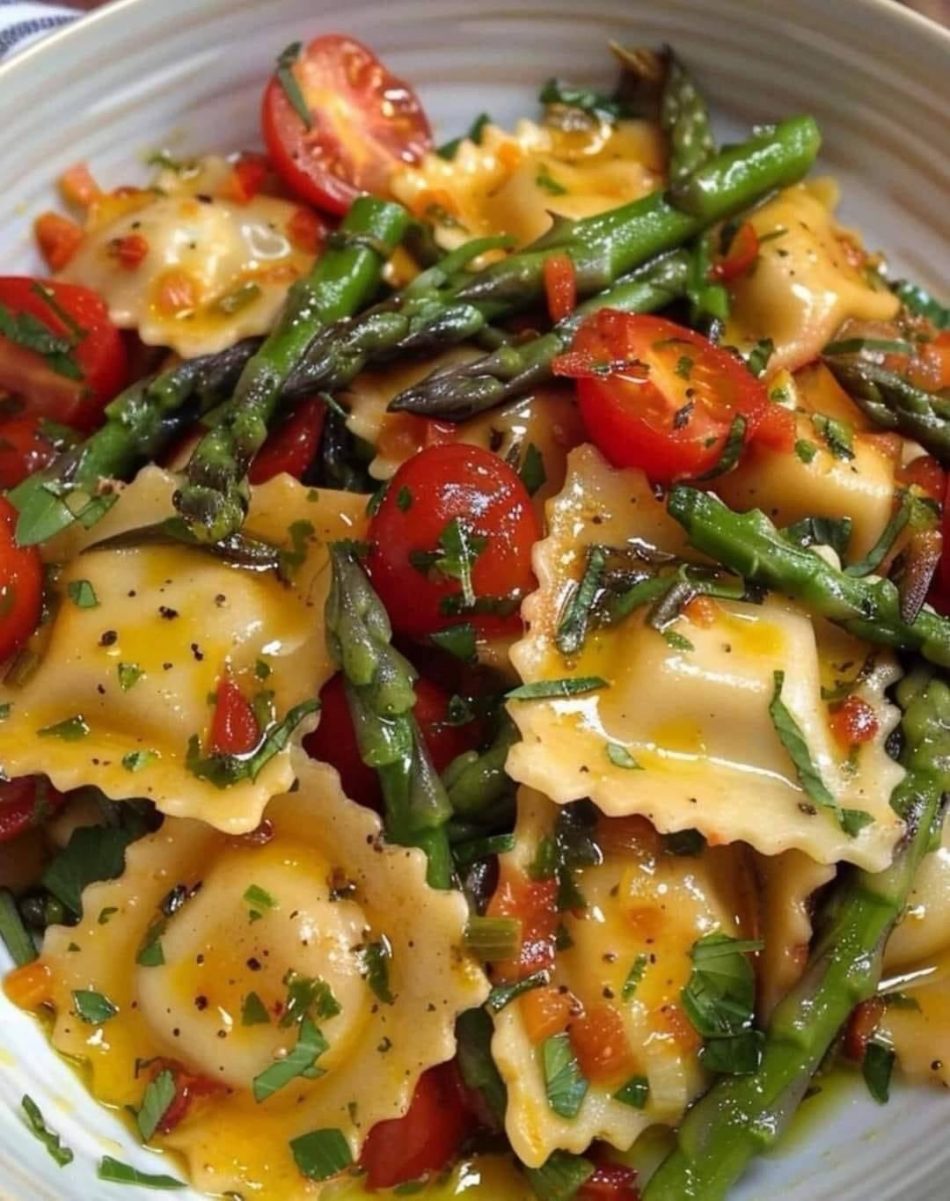
Remove the skillet from the heat. Stir in the fresh basil chiffonade, chopped parsley, lemon zest, and fresh lemon juice. Give it one final, gentle toss. Taste and adjust the seasoning with an extra pinch of sea salt or black pepper if needed.
Chef’s Tips for Success
-
Do Not Overcook the Pasta: Ravioli can easily break open if overcooked, spilling their filling into the water. Cook them just until they float and still have a slight al dente texture, as they will finish cooking for another minute in the hot skillet sauce.
-
Keep the Asparagus Crisp: Nobody enjoys mushy asparagus. To maintain that gorgeous bright green color and snappy texture, do not over-sauté them in the initial step. They will continue to soften as the tomatoes and wine simmer.
-
The Power of Emulsification: The combination of starch from the pasta water, fat from the butter/olive oil, and acid from the wine creates a restaurant-style pan sauce. Skipping the pasta water will result in a greasy oil puddle at the bottom of the plate rather than a smooth, clinging sauce.
Variations and Substitutions
This recipe is highly adaptable based on what you have on hand in your kitchen or what is currently in season:
-
Protein Boost: To make this meal even heartier, stir in some sliced grilled chicken breast, seared shrimp, or crispy pancetta right at the end before serving.
-
Vegetable Swaps: If asparagus isn’t available, swap it out for tender baby spinach, snap peas, or thin ribbons of zucchini.
-
Gluten-Free Option: Use your favorite gluten-free ravioli brand or swap the ravioli entirely for a high-quality gluten-free penne or fusilli.
How to Serve and Store
Transfer the ravioli to wide, shallow bowls. Top generously with freshly grated Parmigiano-Reggiano, a few extra fresh basil leaves, and a final drizzle of high-quality extra-virgin olive oil. Pair this dish with a crisp, chilled glass of the same white wine used in the cooking process, alongside a crusty loaf of artisan bread to soak up every last drop of the garlic-herb sauce.
Storage Instructions: While pasta dishes using fresh produce are always best enjoyed immediately, leftovers can be stored in an airtight container in the refrigerator for up to 2 days. To reheat, gently warm the pasta in a skillet over low heat, adding a splash of water, broth, or olive oil to loosen up the sauce and restore its glossy texture. Avoid microwaving on high heat, as this can cause the delicate ravioli to dry out or split open.